
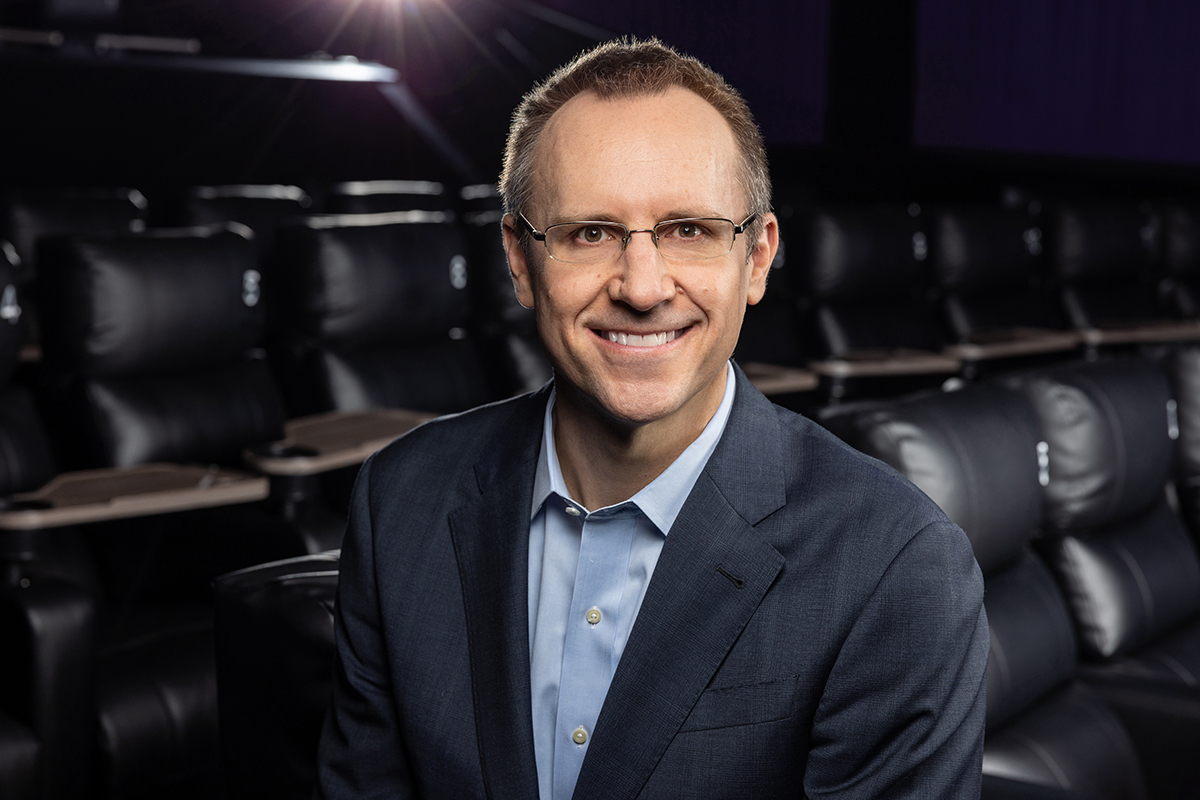
Sean Gamble rose to CEO at Cinemark in 2022 following his eight-year tenure as the multinational chain’s CFO. Serving as current chairman of the Global Cinema Federation (GCF), Gamble joined Boxoffice Pro to discuss the trade group’s latest projects. From advocating for longer theatrical exclusivity windows and providing research on the latest moviegoing trends to promoting increased output from studios for theatrically released titles, Gamble shares the busy year ahead for the GCF.
For our new readers, what is the Global Cinema Federation, and what are the top initiatives the GCF is working on this year?
The Global Cinema Federation comprises the world’s top 12 exhibition companies and two leading industry bodies, with support from 75 exhibitors and 29 associations worldwide. Collectively, our members account for around 65 to 70 percent of the worldwide box office, and we share the aim of supporting a healthy global cinema industry through analysis, education, advocacy, and advancing common interests with a unified voice.
In the current environment, we’re largely focused on performing research, evaluating data, and engaging with consumer studios and the creative community to promote solutions that increase theatrical moviegoing. Doing so includes working actively with our global trade organizations, such as Cinema United and the International Union of Cinemas (UNIC), to further advance the exhibition narrative through public relations efforts and by engaging with key stakeholders on a range of industry issues and opportunities. We just shared the key findings from our most recent annual global consumer research study, which I would encourage everyone to explore.
We’ve had three consecutive years past the $30 billion mark in global box office. What do we need to break through to the next level?
Overall, we remain really pleased with the sustained enthusiasm consumers show for theatrical moviegoing and the high value they derive from global cinema experiences. In our recent GCF consumer survey, 70 percent of respondents indicated that there’s a movie they’re excited to see this year, which is up four percentage points from last year. Our study also found that moviegoing frequency among audiences under 25 has increased considerably over the past six months, which echoes [the National Research Group’s] recent findings by age group. That said, based on our research, some of the primary headwinds to cracking through to that next level you asked about include the volume of movies being released, general awareness of what’s in theaters, and windows. While we continue to see positive progress in volume recovery, the number of wide releases remains below prepandemic levels, with audiences craving more action and adventure, comedy, and romance options. Also, the growing fragmentation of consumer activities and in-home media consumption has increased the complexity of effectively reaching consumers through marketing campaigns, which we’re working with the studios to crack. It’s also becoming apparent that the significantly reduced theatrical windows have adversely affected the number of movies consumers choose to watch in theaters each year. These are all issues we’re discussing and working on with our studio partners to identify prospective solutions and unlock the next level of opportunity for the industry.
The Warner Bros. acquisition is a concern on a global level, impacting jobs not only in Hollywood but in our industry worldwide. What are your main concerns about the impacts of further consolidation among studios?
First, I would say that Warner Bros. has been an amazing partner for theatrical exhibition for decades. They have an incredible team led by Michael De Luca, Pamela Abdy, and Jeff Goldstein, and they just had a record-breaking year in 2025. Our most immediate concern regarding that deal is the legacy of Warner Bros. and the strong partnership they provide our industry—making sure those live on, including the many positive benefits they provide exhibitors, creatives, consumers, and the local economies that depend on healthy theaters in their communities. As it pertains to studio consolidation in general, any transaction that yields sustained or increased investment in the quality, scale, and output of films released into theaters each year, along with comprehensive marketing campaigns and robust exclusive theatrical windows, would be viewed positively by our industry. On the contrary, a transaction that leads to lower film output, shorter windows, and weaker marketing campaigns would be detrimental to the theatrical ecosystem, which relies on a strong, vibrant moviegoing business.
We heard calls for a 45-day minimum window from several top circuits at CinemaCon last year. Do you believe we are closer to seeing that benchmark across every studio?
I wish I could say we’ve seen meaningful movement, but that just isn’t the case yet. In fact, in 2025, the average domestic wide release window dropped to 34 days, and we’re now starting to see the adverse impact of too many films being released with highly reduced windows. Probably the most positive development since last year has been the increased attention and discussion we’re seeing on this important matter, both publicly and privately. At the same time, Disney, which is consistently the top-performing studio in the business, has maintained a 60-plus day window for the majority of their films, and a growing number of filmmakers, in addition to long-standing supporters like Christopher Nolan, Tom Cruise, and James Cameron, are advocating for longer windows. We all heard Sean Baker’s speech at the Academy Awards last year, and recently, Margot Robbie and Emerald Fennell were adamant about releasing “Wuthering Heights” in theaters, turning down streaming offers. While a more flexible window structure can provide certain benefits to both studios and exhibitors, based on the best available data, 45 days continues to represent the best balance for the majority of films to fully preserve and capture the value of theatrical exhibition without suboptimizing performance and creating confusion.
After surviving a worst-case scenario for our industry at the start of the decade, how do you envision the moviegoing experience will evolve by the time we hit 2030?
We remain highly encouraged by enduring consumer interest in the larger-than-life theatrical experiences created in cinemas around the world. Our industry continues to pump billions of dollars into enhancing and enriching those experiences every year. I think we’ll continue to see that improve over the next four to five years based on current trends and growing consumer demand. I expect we’ll continue to see further expansion of enhanced formats and amenities, including premium large format (PLF) screens, luxury in-motion seating concepts, and new and improved sight and sound technologies. I also anticipate a further rollout of more varied and enhanced food, beverage, and merchandise concepts that have been resonating exceptionally well with audiences. They also add to the excitement of going to the cinema and drive increased consumption, which is fantastic. Finally, I also expect we’ll continue to see additional growth in event cinema. There’s been so much progress in nontraditional films and content and growing interest among audiences to see that kind of product in cinemas, and I think we’re going to see more of it over the next four to five years. Obviously, there are certain things we need to continue discussing as an industry, but there are so many opportunities and encouraging signs about our future. I know we can get it right and look forward to the next four to five years of further growth.




Share this post